Your Apartment Isn't Runway Ready: 10 Hacks to Make Your Place Look Even Better
Your apartment isn't runway ready yet, but it can be. Ten renter-friendly hacks to make a budget place look put together, without risking your deposit.
A practical safety checklist for off-campus student housing: what to check on the building, in the unit, and around the neighborhood before you sign.
August 14, 2026
Safety is easy to overlook when you're focused on rent and location, but a few minutes checking the basics during a tour can save a lot of worry later. Here's what to actually look for, broken into the building, the unit itself, and the neighborhood around it.
Check whether entrances are actually secured, gated parking, keyed or fob entry to the building, doors that close and lock properly rather than propping open. Walk the exterior at some point, ideally in the evening, and notice whether it's well lit: parking areas, walkways, and entrances specifically. Look for visible security cameras, and ask whether they're monitored or just present. None of these individually make or break a decision, but together they tell you how seriously the property takes security.
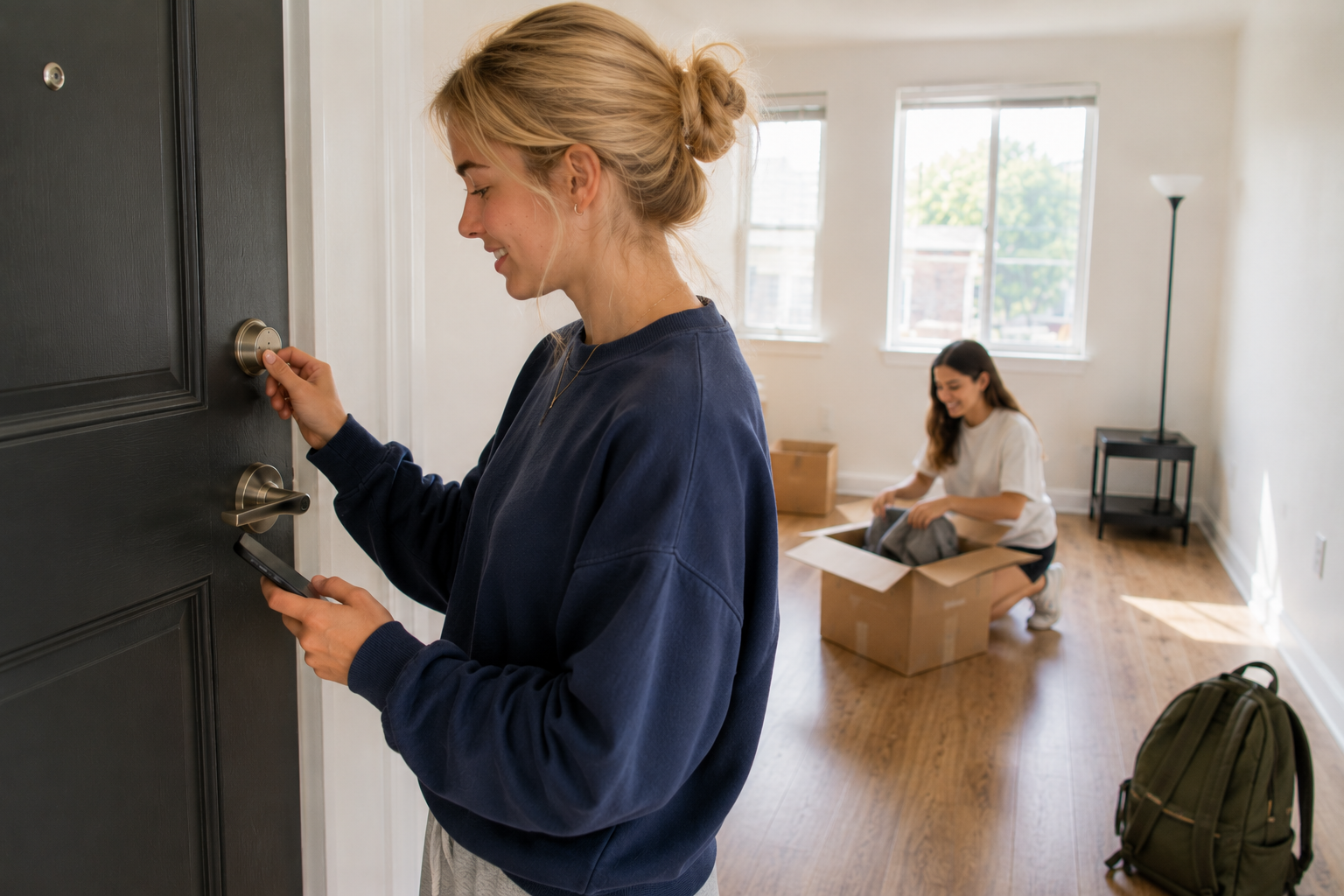
Inside the specific unit, check that the front door has a working deadbolt, not just the doorknob lock, and that windows actually lock, especially any on the ground floor or accessible from a balcony or fire escape. Look for a peephole or door viewer. If the unit is on the ground floor or otherwise easily accessible from outside, ask directly what additional security measures, if any, the property offers.
Walk or drive the surrounding area at a time similar to when you'd actually be coming and going, not just during a daytime tour. Notice lighting along your likely walking route, especially if you'll be walking to a shuttle stop or campus after dark. It's also worth doing a basic search on the neighborhood and, if you want more specifics, checking whether the local police department publishes any crime data for the area.
Ask how maintenance requests are submitted and what the typical response time looks like, especially for anything safety-related like a broken lock or a non-functioning exterior light. A property that's slow to fix a broken lock is telling you something about how they'll handle other issues too. If there's on-site staff or a leasing office, ask about their hours and how to reach someone after hours in an emergency.
A few direct questions are worth asking rather than assuming: what's the process for reporting a safety concern, has there been any recent history of break-ins or safety incidents at the property, and what security measures (cameras, gated access, on-site staff) does the property actually have versus what's just mentioned in marketing materials. A leasing agent who answers these directly and specifically is generally a good sign; vague or deflecting answers are worth noting.
A few signs worth paying attention to: exterior lighting or locks that are visibly broken and don't seem to be a priority to fix, no clear on-site presence or way to reach someone for an urgent issue, or other current residents mentioning unaddressed safety concerns if you get the chance to ask. None of these are automatic dealbreakers on their own, but a pattern of them is worth taking seriously.
If you're evaluating a lease takeover rather than a brand-new lease, you have an advantage most renters don't: you can ask the current tenant directly about their actual experience living there, not just what a leasing office tells you during a tour. Ask specifically about safety, not just amenities and price. You'll also need to vet the people side of a takeover specifically, and make sure you are comfortable with your new roommates if you haven't known them previously.
Q - What should I check for safety before signing a lease?
A - Working locks on doors and windows, adequate exterior lighting, secured building entrances, and how responsive property management is to maintenance and safety issues.
Q - How do I check the safety of a neighborhood before moving?
A - Walk or drive the area at a time similar to when you'd actually be coming and going, not just during a daytime tour, and check whether the local police department publishes any crime data for the area.
Q - What questions should I ask a landlord about safety?
A - Ask how safety concerns get reported, whether there's been any recent history of incidents at the property, and what security measures are actually in place versus just advertised.
Q - Are ground-floor apartments less safe?
A - Not automatically, but they're generally more accessible, so it's worth double-checking that windows and doors have working locks and asking what additional security measures the property offers.
Q - What's a red flag for safety when touring a property?
A - Visibly broken locks or lighting that don't seem to be a priority to fix, and no clear way to reach someone for an urgent issue. A pattern of these is worth taking seriously.
Off-campus housing transitions can be frustrating and confusing. Searching for answers and not sure where to start? That's why we're here. Email the Team at hello@myleasetakeover.com, or send us a message on Instagram or Facebook. We’re glad to help.
Written by the Team at myleasetakeover.com | Join the Takeover.
We started myleasetakeover.com because we've been there: a housing plan that changed overnight with no clear next step. We're here to help students and parents navigate housing transitions, so you don't have to figure it out alone.
 Janelle Rawlston