5 Reasons Moving Mid-Semester Might Be Your Best Move
Thinking about moving out mid-semester? Here are five good reasons it might be the right call, when to stay put, and how to leave without paying for months you won't use.
Need out of your off-campus lease? Compare breaking it, doing a lease takeover, and subletting side by side: cost, liability, credit impact, and which one fits your situation.

October 19, 2026
If you're trying to leave an apartment before your lease ends, you have three main paths: break the lease, hand it off to someone else with a lease takeover, or sublet your space. They sound similar but work very differently, especially when it comes to who's still responsible for rent and what it can do to your credit. Here's how they compare, and how to pick the one that fits.
Breaking the lease means ending it early without a replacement tenant. You're usually still on the hook for penalties, fees, or remaining rent, depending on your lease and your landlord. Leaving in the middle of the night and abandoning your lease might seem like the way out... but it can be the most costly and also impact your credit (and your guarantor's credit).
A lease takeover (lease assignment) means a new tenant officially replaces you. With your landlord's approval, your name comes off the lease, and theirs goes on, so your obligation ends once everything's in place.
A sublet means someone else lives in your space and pays rent for a set period, but you stay on the original lease. You're still legally responsible if they don't pay or they cause damage to your place.
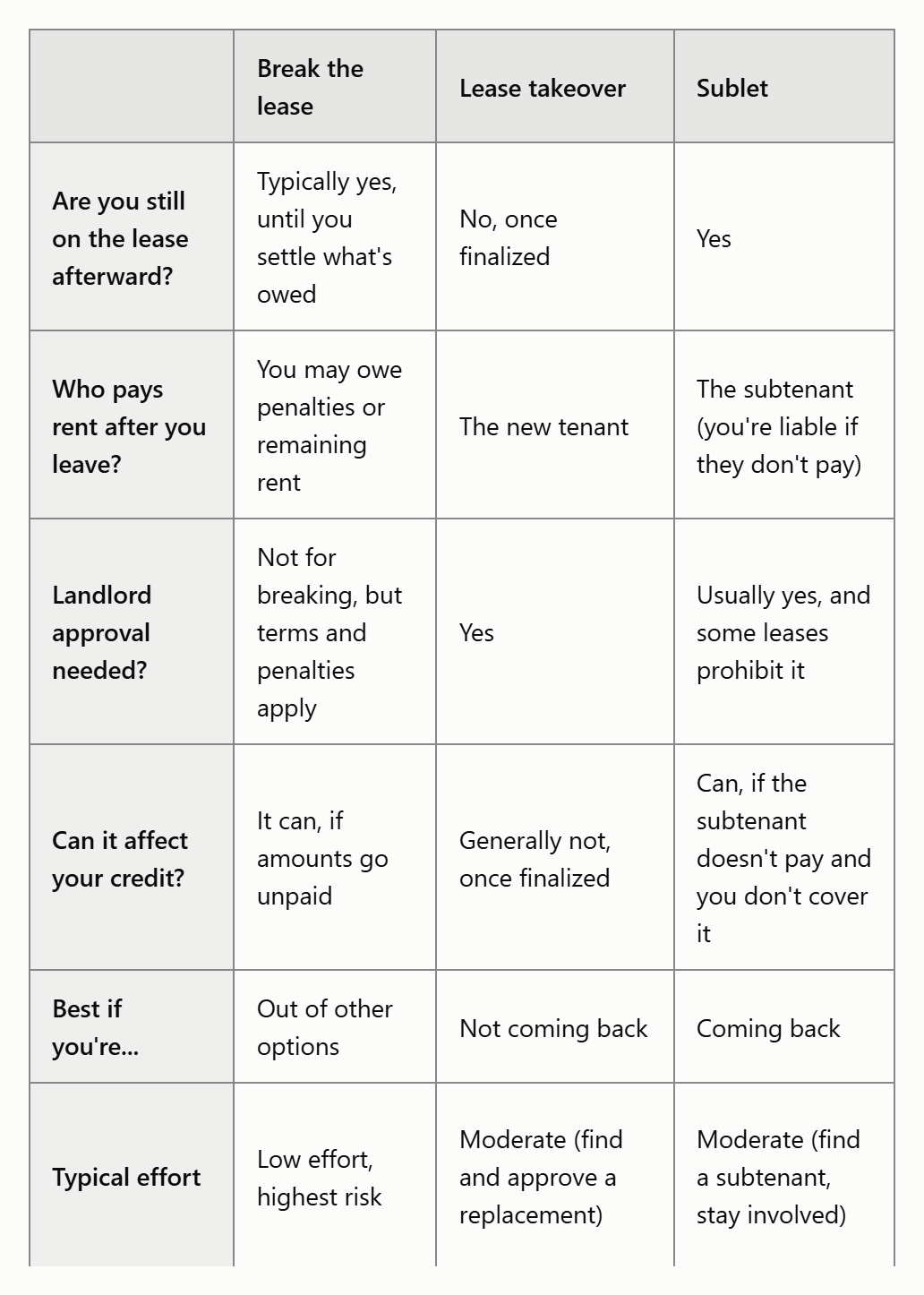
Notes: This is general information, not legal advice. Exact terms and penalties vary by lease, landlord, and state, so check your own lease.
Breaking a lease is the simplest on paper and often the costliest. Depending on your lease, you may owe an early termination fee, remaining rent until a new tenant is found, or other charges, and unpaid amounts can affect your credit and future rental applications. It's worth exploring a takeover or a sublet before settling on this one.
A takeover is the only option of the three that fully ends your responsibility. Your landlord approves a replacement tenant, everyone signs an assignment agreement, and your name comes off. It takes some effort to find a qualified replacement, and it requires your landlord's consent, but for anyone not planning to return, it's usually the strongest choice. If you were a guarantor or cosigner, ask whether your obligation ends too, and get that in writing.
Subletting makes sense when your absence is temporary, like a semester abroad or a summer internship, and you plan to return to the same apartment. The tradeoff is that you stay legally responsible, so you're trusting your subtenant with your name and credit. Check that your lease allows it, since some prohibit subletting, and get a written sublease agreement.
Ask yourself three questions:
Still not sure?
 Janelle Rawlston
Q - What's the main difference between a sublet and a lease takeover?
A - With a sublet, you stay on the lease and remain responsible. With a lease takeover, a new tenant replaces you and your obligation ends once it's finalized.
Q - Is a lease takeover the same as breaking my lease?
A - No. Breaking a lease usually means penalties or remaining rent. A takeover transfers the lease to a new tenant with your landlord's approval.
Q - Which option is cheapest?
A - It depends on your lease. Breaking a lease often carries the highest risk of owing money, while a takeover or sublet usually keeps costs lower if you find a qualified replacement.
Q - Do I need my landlord's permission?
A - For a takeover, yes. For a sublet, usually yes, and some leases prohibit it. Breaking a lease doesn't need approval, but penalties may apply. Check your lease.
Q - Which option is best if I'm not coming back?
A - A lease takeover, since it's the only option that fully ends your responsibility for the apartment.
Off-campus housing transitions can be frustrating and confusing. Searching for answers and not sure where to start? That's why we're here. Email the Team at hello@myleasetakeover.com, or send us a message on Instagram or Facebook. We’re glad to help.
Written by the Team at myleasetakeover.com | Join the Takeover.
We started myleasetakeover.com because we've been there: a housing plan that changed overnight with no clear next step. We're here to help students and parents navigate housing transitions, so you don't have to figure it out alone.
 Janelle Rawlston