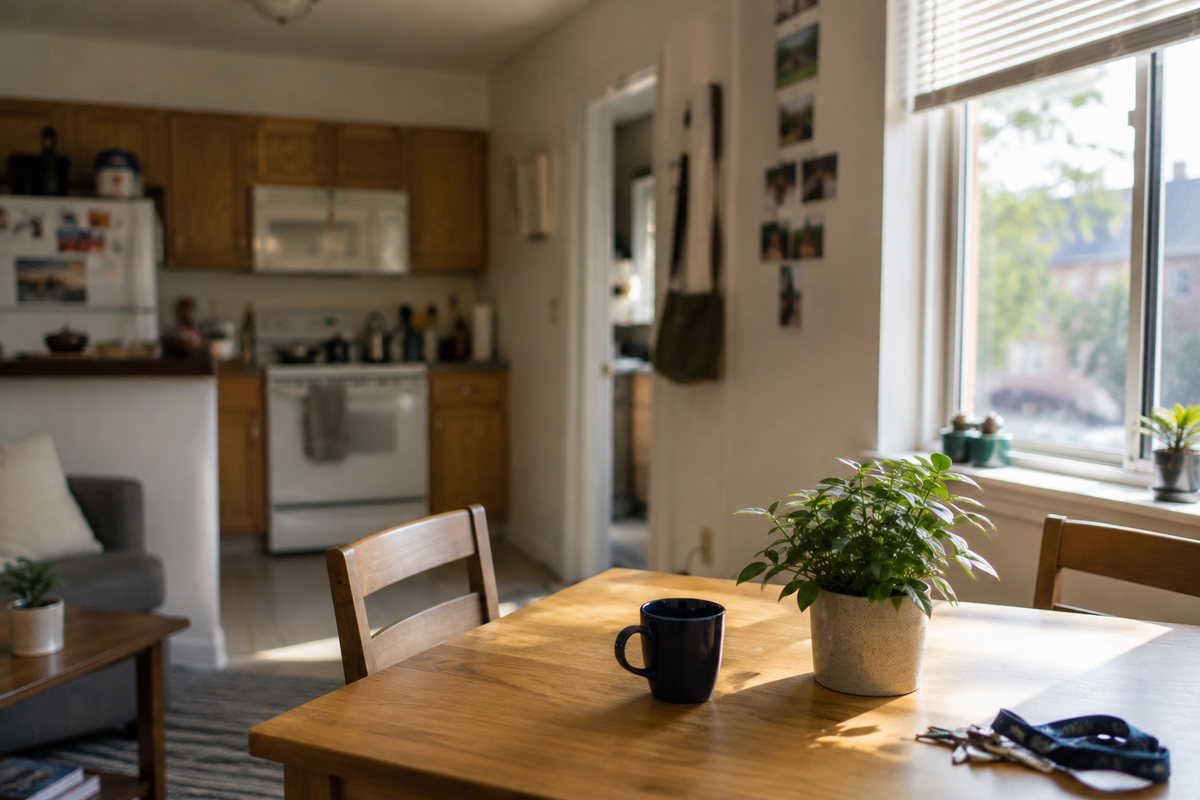
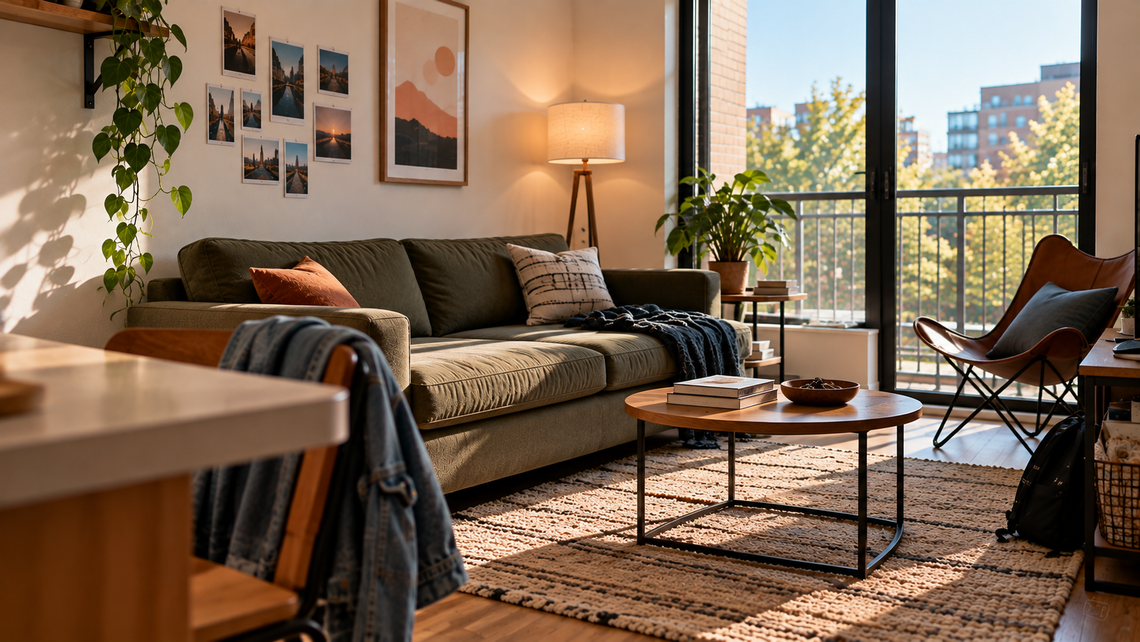
Your Apartment Isn't Runway Ready: 10 Hacks to Make Your Place Look Even Better
Your apartment isn't runway ready yet, but it can be. Ten renter-friendly hacks to make a budget place look put together, without risking your deposit.

September 2, 2026
Rent and location aren't the only things worth weighing when you're choosing off-campus housing. Noise levels, who you're living with, how far you are from campus, and whether you have a real place to sit down and work all quietly shape how much studying actually happens once you move in. Here's what's worth thinking about before you sign, not after a rough first semester.
A cheap apartment right next to a busy street, a shared wall with a party-prone neighbor, or paper-thin construction can turn "I'll just study at home" into something that never actually happens. Before signing, ask about wall and floor construction if you can, and if you're touring in person, listen for what you can hear from neighboring units. A quieter, slightly more expensive place can save you money in the long run if it means you're not constantly paying for a coffee shop table just to get work done.
A longer commute doesn't just cost you time, it costs you the spontaneous trips back to campus for office hours, study groups, or the library that are easy to skip when they require a 20-minute drive. If your program leans heavily on in-person collaboration or lab access, weigh that against how much you're saving by living further out. For some students, a slightly higher rent closer to campus pays for itself in how much more consistently they actually show up to the resources available to them.
A roommate whose schedule and study habits clash with yours can undo almost any advantage a good apartment location gives you. If you're night-owl and your roommate is up at 6am, or you need silence to focus and they work best with music on, that friction adds up over a semester. It's worth asking before you commit to living with someone, and it's worth treating study habits as seriously as cleanliness or noise tolerance when you're evaluating a match.
Not every apartment layout gives you a real desk setup, and "I'll just work from my bed" tends to hold up for about two weeks before it stops working. Before you sign, think through where you'd actually sit down to study: a bedroom with room for a desk, a quiet corner of a shared living space, or, if the unit doesn't offer either, whether you're comfortable relying on campus study spaces instead. It's a small detail that's easy to overlook while touring a place focused on the kitchen and the bathroom.
If you're helping fund your student's housing, it's worth asking a few of these same questions before signing off on a lease, not just about price and safety. A cheaper apartment that quietly undermines their ability to focus isn't actually the better deal if it leads to a harder semester. Asking about noise, roommate compatibility, and whether they have a real place to study is a natural way to stay involved without taking over the decision. A balance is important.
If you're already in a living situation that's making it hard to focus, whether that's noise, a roommate mismatch, or something else, it's worth taking that seriously rather than just pushing through the semester. It's important to know how to tell the difference between normal adjustment and a real problem, and what your options are if a change makes sense.
Q - Does apartment noise actually affect academic performance?
A - Short answer - it can. A consistently loud or distracting living environment makes it harder to study at home, which often means relying more on outside spaces like the library or coffee shops to get work done.
Q - Is it worth paying more to live closer to campus?
A - It depends on your program and habits. If you rely on in-person resources like office hours, labs, or study groups, a shorter commute can make it easier to actually use them consistently.
Q - How much does a roommate's habits affect my ability to study?
A - More than people expect. Mismatched schedules or study styles can create ongoing friction that undermines even a well-located, quiet apartment.
Q - What should I look for if I need a quiet place to study at home?
A - A room or space where you can realistically set up a desk, reasonable wall and floor construction if you're sensitive to noise, and a roommate situation that doesn't clash with your study habits.
Q - What if my current apartment isn't working for my focus or grades?
A - It's worth evaluating honestly rather than assuming it'll improve on its own.
Off-campus housing transitions can be frustrating and confusing. Searching for answers and not sure where to start? That's why we're here. Email the Team at hello@myleasetakeover.com, or send us a message on Instagram or Facebook. We’re glad to help.
Written by the Team at myleasetakeover.com | Join the Takeover.
We started myleasetakeover.com because we've been there: a housing plan that changed overnight with no clear next step. We're here to help students and parents navigate housing transitions, so you don't have to figure it out alone.
 Janelle Rawlston