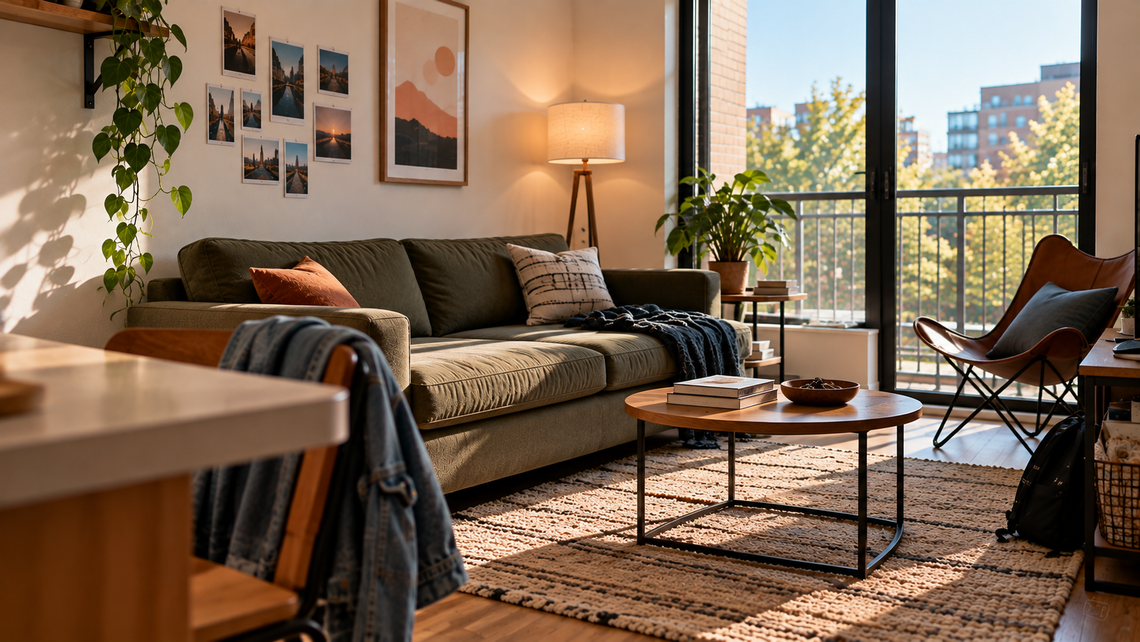
Your Apartment Isn't Runway Ready: 10 Hacks to Make Your Place Look Even Better
Your apartment isn't runway ready yet, but it can be. Ten renter-friendly hacks to make a budget place look put together, without risking your deposit.
Moving off campus changes more than your logistics, it changes how much structure and accountability you have to build for yourself. Here's what to expect.

September 27, 2026
The biggest shift when you move off campus isn't the commute or the furniture. It's that the structure built into dorm life disappears, and you're the one who has to replace it. No RA down the hall, no built-in community 5 feet from your door, no one checking whether you made it to breakfast before your 9am. That's not a bad thing, but it's a real adjustment, and worth knowing what to expect before it catches you off guard.
In a dorm, there's a built-in layer of people paying loose attention to how you're doing: an RA who notices if you've been quiet lately, hallmates who see you every day, a community that makes isolation harder simply by being around you every day. Off campus, that layer is gone unless you build something like it yourself. It's not that anyone stops caring, it's that the structure that used to do some of that noticing automatically now depends on you staying connected on purpose, whether that's roommates, friends, or regular contact with your family.
Waking up in time for class, and in time to get there, deciding whether to cook or skip a meal, choosing to do laundry before you're out of clean clothes rather than after: none of this had much friction in a dorm, where meals, routines, and even social rhythms were largely built for you. Off campus, every one of these becomes a decision you have to actually make, each day, each week, without anything nudging you toward the better choice. That's a real change that people don't always expect, even when they're excited about the independence.
The upside is that you get to build a routine that actually works for you instead of one designed for a building full of strangers. The catch is that nothing does this for you automatically. A few things that help: keeping a consistent wake-up time even without a dorm hallway full of noise to do it for you, setting a loose weekly rhythm for groceries and cleaning rather than waiting until you run out or run into a mess, and treating your own accountability as something you're actively building, not something you'll just naturally have because you're now living alone.
Dorm friendships often happen through sheer proximity: someone's always in the hallway, the lounge, or the room next door - there's usually someone around to go eat dinner with. Off campus, especially if your friends are scattered across different apartments or parts of town, staying close takes actual planning instead of just showing up. This isn't a reason to worry - it's just a heads-up that the ease of freshman-year friendships was partly a function of the building you lived in, not something that continues automatically. Being intentional about staying in touch matters more now than it used to.
If your student seems less immediately "checked on" once they move off campus, that's often just this structural shift showing up, not necessarily a sign something's wrong. It can be a good moment to build a slightly more deliberate rhythm of contact with them, since the informal safety net of dorm life isn't there anymore in the same way. "How Parents Can Stay Involved (Without Hovering) in Their Student's Housing Decisions" covers how to do that without taking over decisions they're capable of making themselves.
The first few weeks off campus tend to be the hardest part of this adjustment, simply because you're building new habits from nothing. Most students find their footing within a semester, once a routine actually forms and becomes automatic rather than something they have to consciously think through every day. If it feels harder than expected early on, that's normal, not a sign you're doing it wrong.
Q - Is it normal to feel less structured after moving off campus?
A - Yes. Dorm life comes with a lot of built-in structure, meals, proximity to friends, someone checking in, that disappears once you're off campus, and rebuilding it takes intentional effort.
Q - Why do friendships feel harder to maintain off campus?
A - Dorm friendships often rely on proximity as much as effort. Off campus, especially with friends spread across different apartments, staying close requires more deliberate effort and planning.
Q - How long does it usually take to adjust to off-campus living?
A - Most students find a workable routine within a semester. The first few weeks tend to be the hardest simply because the structure is new.
Q - Should parents worry if their student seems less checked-in after moving off campus?
A - Not necessarily. It's often just the natural result of dorm life's built-in structure disappearing, and it's a good time to build a more intentional rhythm of contact rather than assuming something's wrong.
Q - What's the best way to build structure without a dorm's built-in routines?
A - Small, consistent habits help most: a regular wake-up time, a loose weekly rhythm for groceries and cleaning, and being intentional about staying in touch with friends rather than relying on proximity.
Off-campus housing transitions can be frustrating and confusing. Searching for answers and not sure where to start? That's why we're here. Email the Team at hello@myleasetakeover.com, or send us a message on Instagram or Facebook. We’re glad to help.
Written by the Team at myleasetakeover.com | Join the Takeover.
We started myleasetakeover.com because we've been there: a housing plan that changed overnight with no clear next step. We're here to help students and parents navigate housing transitions, so you don't have to figure it out alone.
 Janelle Rawlston